
ออฟฟิศซินโดรม
รักษาให้ตรงจุด ก่อนอาการเรื้อรังOffice Syndrome
Targeted Care Before It Becomes Chronic
ดูแลอาการปวดคอ บ่า ไหล่ และหลัง จากการนั่งทำงานเป็นเวลานาน ด้วยการประเมินและวางแผนกายภาพบำบัดเฉพาะบุคคลRelief for neck, shoulder, and back pain from long hours at a desk — through personalized assessment and physiotherapy planning.
โดยนักกายภาพบำบัดวิชาชีพ • รองรับภาษาไทยและอังกฤษBy licensed physiotherapists • Thai & English speaking

ออฟฟิศซินโดรม คืออะไร?What Is Office Syndrome?
ออฟฟิศซินโดรมเป็นกลุ่มอาการปวดและตึงของกล้ามเนื้อที่มักเกิดจากการนั่งทำงานในท่าเดิมเป็นเวลานาน การใช้คอมพิวเตอร์หรือโทรศัพท์ซ้ำ ๆ รวมถึงท่าทางที่ไม่เหมาะสม เช่น คอยื่น ไหล่งุ้ม หรือหลังค่อมOffice syndrome is a group of muscle pain and tension symptoms that often result from sitting in the same position for long periods, repetitive computer or phone use, and poor posture such as a forward head, rounded shoulders, or a slouched back.
หากปล่อยไว้นาน อาการอาจกลับมาเป็นซ้ำและรบกวนการทำงาน การนอนหลับ และกิจกรรมในชีวิตประจำวันได้Left unaddressed, symptoms can recur and interfere with work, sleep, and everyday activities.
- ทำงานหน้าคอมหลายชั่วโมงต่อวันWorking at a computer for many hours a day
- ใช้โทรศัพท์หรือแท็บเล็ตบ่อยFrequent phone or tablet use
- นั่งท่าเดิมเป็นเวลานานSitting in the same position for long periods
- Work From HomeWorking from home
- ขาดการยืดเหยียดหรือออกกำลังกายLittle stretching or exercise
อาการที่พบบ่อยCommon Symptoms
สัญญาณจากร่างกายที่ไม่ควรมองข้ามSigns from your body worth paying attention to
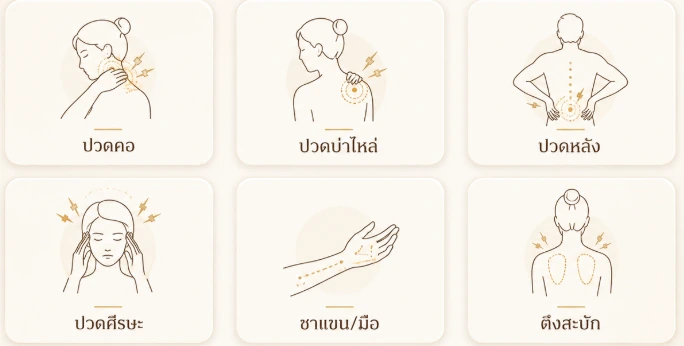
อาการของแต่ละคนอาจแตกต่างกัน นักกายภาพบำบัดจะประเมินเพื่อหาสาเหตุและเลือกแนวทางการรักษาที่เหมาะสมSymptoms vary from person to person. A physiotherapist will assess your condition to identify the cause and choose a suitable treatment approach.
ทำไมออฟฟิศซินโดรมถึงเกิดขึ้น?Why Does Office Syndrome Happen?
นั่งท่าเดิมนานเกินไปStaying in One Position Too Long
ร่างกายต้องใช้กล้ามเนื้อบางกลุ่มค้างไว้ต่อเนื่อง ทำให้เกิดความล้าและตึงสะสมThe body holds certain muscle groups still for long periods, leading to fatigue and built-up tension.
ท่าทางการทำงานไม่เหมาะสมPoor Working Posture
จอคอมต่ำหรือสูงเกินไป เก้าอี้ไม่พอดี หรือมีพฤติกรรมคอยื่น ไหล่งุ้มA monitor set too low or high, an ill-fitting chair, or habits like a forward head and rounded shoulders.
ใช้งานกล้ามเนื้อซ้ำ ๆRepetitive Muscle Use
การใช้เมาส์ คีย์บอร์ด หรือโทรศัพท์เป็นเวลานานอาจทำให้กล้ามเนื้อบางส่วนทำงานหนักเกินไปProlonged use of a mouse, keyboard, or phone can overwork certain muscle groups.
กล้ามเนื้อขาดความแข็งแรงWeak Supporting Muscles
เมื่อกล้ามเนื้อที่ช่วยพยุงคอ หลัง และสะบักไม่แข็งแรง ร่างกายอาจชดเชยด้วยท่าทางที่ผิดWhen the muscles that support the neck, back, and shoulder blades are weak, the body compensates with poor posture.
รักษาแบบเฉพาะบุคคล ไม่ใช่เพียงคลายอาการชั่วคราวPersonalized Care, Not Just Temporary Relief
นักกายภาพบำบัดจะประเมินลักษณะอาการ การเคลื่อนไหว ความแข็งแรงของกล้ามเนื้อ และพฤติกรรมการทำงาน ก่อนเลือกวิธีการรักษาที่เหมาะสมOur physiotherapists assess your symptoms, movement patterns, muscle strength, and work habits before selecting the right course of treatment.
Manual TherapyManual Therapy
การรักษาด้วยมือHands-On Treatment
ช่วยลดความตึงของกล้ามเนื้อและเพิ่มการเคลื่อนไหวของข้อต่อEases muscle tension and improves joint mobility.
Therapeutic ExerciseTherapeutic Exercise
การออกกำลังกายเพื่อการฟื้นฟูExercise for Recovery
ฝึกการยืดเหยียดและเสริมความแข็งแรงของกล้ามเนื้อที่เกี่ยวข้องGuided stretching and strengthening for the muscles involved.
Physical Therapy ModalitiesPhysical Therapy Modalities
เครื่องมือทางกายภาพบำบัดPhysiotherapy Equipment
เลือกใช้เครื่องมือ เช่น Shockwave, High Power Laser หรือ Ultrasound ตามความเหมาะสมของอาการTools such as Shockwave, High Power Laser, or Ultrasound, selected based on your condition.
Posture & ErgonomicsPosture & Ergonomics
ปรับท่าทางและสภาพแวดล้อมการทำงานAdjusting Posture & Work Setup
แนะนำการนั่ง การจัดโต๊ะ จอคอม และพฤติกรรมระหว่างวัน เพื่อลดโอกาสกลับมาเป็นซ้ำGuidance on sitting, desk setup, monitor position, and daily habits to reduce the chance of recurrence.
เริ่มต้นดูแลอาการอย่างเป็นขั้นตอนA Structured Path to Recovery
ประเมินอาการAssessment
ซักประวัติและตรวจบริเวณที่มีอาการปวดหรือตึงHistory taking and examination of painful areas
วิเคราะห์สาเหตุRoot Cause Analysis
ประเมินท่าทาง การเคลื่อนไหว และการทำงานของกล้ามเนื้อAssessing posture, movement, and muscle function
วางแผนการรักษาTreatment Planning
เลือกเทคนิคและเครื่องมือให้เหมาะกับแต่ละบุคคลChoosing techniques and equipment suited to you
ฟื้นฟูและป้องกันRecovery & Prevention
ให้คำแนะนำ การออกกำลังกาย และวิธีลดการกลับมาเป็นซ้ำGuidance, exercises, and ways to prevent recurrence
ดูแลมากกว่าแค่อาการปวดCare That Goes Beyond the Pain
นักกายภาพบำบัดวิชาชีพLicensed Physiotherapists
ดูแลและประเมินโดยผู้ประกอบวิชาชีพCare and assessment by licensed professionals
Personalized TreatmentPersonalized Treatment
วางแผนการรักษาตามอาการของแต่ละบุคคลA treatment plan built around your symptoms
Modern EquipmentModern Equipment
มีเครื่องมือกายภาพบำบัดเพื่อช่วยในการฟื้นฟูPhysiotherapy equipment to support recovery
Thai & EnglishThai & English
รองรับการสื่อสารทั้งภาษาไทยและภาษาอังกฤษCommunication in both Thai and English
หากมีอาการปวดข้อไหล่หรือไหล่ติดร่วมด้วย ดูข้อมูลเพิ่มเติมได้ที่ ปวดข้อไหล่ / ไหล่ติด If you also experience shoulder pain or stiffness, learn more about Shoulder Pain & Frozen Shoulder
คำถามที่พบบ่อยเกี่ยวกับออฟฟิศซินโดรมFrequently Asked Questions About Office Syndrome
ออฟฟิศซินโดรมหายเองได้ไหม?Can office syndrome heal on its own?
อาการเล็กน้อยอาจดีขึ้นหลังพักหรือปรับพฤติกรรม แต่หากสาเหตุเดิมยังคงอยู่ อาการสามารถกลับมาเป็นซ้ำได้ การประเมินช่วยให้ทราบว่าควรแก้ไขจุดใดMild symptoms may improve with rest or better habits, but if the underlying cause remains, symptoms can return. An assessment helps identify what needs to be addressed.
ต้องทำกายภาพกี่ครั้ง?How many physiotherapy sessions will I need?
จำนวนครั้งขึ้นอยู่กับความรุนแรง ระยะเวลาที่มีอาการ และการตอบสนองต่อการรักษาของแต่ละบุคคลThe number of sessions depends on severity, how long you've had symptoms, and your individual response to treatment.
ปวดคอจากการทำงานควรมาพบเมื่อไร?When should I see someone about work-related neck pain?
หากมีอาการต่อเนื่อง กระทบการทำงานหรือนอนหลับ หรือมีอาการชา/อ่อนแรงร่วมด้วย ควรได้รับการประเมินจากผู้เชี่ยวชาญIf symptoms are persistent, affect your work or sleep, or come with numbness or weakness, you should be assessed by a specialist.
สามารถกลับไปทำงานหลังทำกายภาพได้ไหม?Can I go back to work after a session?
โดยทั่วไปสามารถทำกิจกรรมประจำวันได้ แต่ขึ้นอยู่กับอาการและแนวทางที่นักกายภาพแนะนำในแต่ละกรณีGenerally yes — most daily activities can continue, though this depends on your condition and your physiotherapist's specific guidance.
อย่าปล่อยให้อาการปวดจากการทำงาน กลายเป็นปัญหาเรื้อรังDon't Let Work-Related Pain Become a Chronic Problem
เริ่มต้นด้วยการประเมินอาการ เพื่อวางแผนดูแลที่เหมาะกับร่างกายของคุณStart with an assessment, and let us design a care plan built for your body.